Mahjong is a traditional tile-based game that has been played for generations and continues to attract new players around the world. Known for its distinctive tiles, strategic gameplay, and social nature, Mahjong is much more than a simple matching game. It combines skill, memory, decision-making, and a little luck, making every round feel different.
If you are new to Mahjong, the tiles and rules can seem complicated at first. However, once you understand the basic structure of the game, the different tile types, and how a winning hand is formed, Mahjong becomes much easier to follow. This beginner’s guide explains what Mahjong is, how the game works, and what you need to know before playing your first round.
What Is Mahjong?
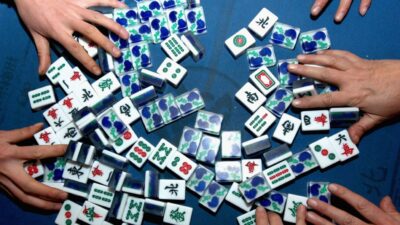
Mahjong is a game traditionally played by four people using a set of decorated tiles. Players take turns drawing and discarding tiles while trying to build a complete winning hand.
The game originated in China and later developed into different regional versions around the world. Today, you may come across Chinese Mahjong, Hong Kong Mahjong, American Mahjong, Japanese Riichi Mahjong, and several other variations. While each version has its own rules and scoring system, the basic idea of collecting useful combinations of tiles remains similar.
Mahjong is especially popular as a social game. Friends and family often gather around a table to play multiple rounds, making the game as much about conversation and shared time as competition.
How Many Tiles Are in a Mahjong Set?
A traditional Mahjong set commonly contains 144 tiles, although the exact number used can vary depending on the version of the game.
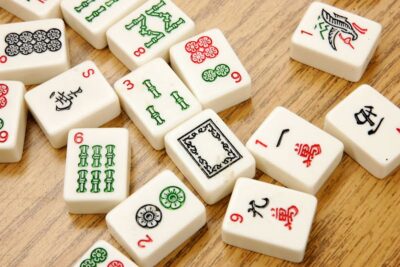
The main tiles are divided into numbered suits and honor tiles. Some sets also include bonus tiles such as Flowers and Seasons.
Numbered Suit Tiles
There are three main numbered suits in Mahjong:
- Characters: Tiles numbered from one to nine, traditionally featuring Chinese characters.
- Bamboo: Tiles numbered from one to nine, usually decorated with bamboo-style symbols.
- Dots: Tiles numbered from one to nine, represented by circular patterns.
Each numbered tile usually appears four times in a standard set.
Honor Tiles
Honor tiles do not have numbers. Instead, they are divided into Winds and Dragons.
- Wind Tiles: East, South, West, and North.
- Dragon Tiles: Red Dragon, Green Dragon, and White Dragon.
These symbols are some of the most recognizable elements of Mahjong and often appear in artwork, clothing, home décor, and Mahjong merchandise inspired by the game.
Flower and Season Tiles
Many Mahjong sets also include Flower and Season tiles. These are normally treated as bonus tiles rather than tiles used to build standard combinations. Their exact role depends on the Mahjong variation being played.
What Is the Goal of Mahjong?
The basic goal of Mahjong is to create a complete hand before the other players.
In many traditional versions, a winning hand consists of 14 tiles arranged into four groups and one pair. The groups are usually made from combinations called Pongs, Chows, and Kongs.
- Chow: Three consecutive numbered tiles from the same suit, such as 3, 4, and 5 Bamboo.
- Pong: Three identical tiles.
- Kong: Four identical tiles.
- Pair: Two identical tiles.
Not every Mahjong version follows exactly the same winning-hand requirements, but these combinations are an important foundation for understanding the game.
How Does a Game of Mahjong Work?
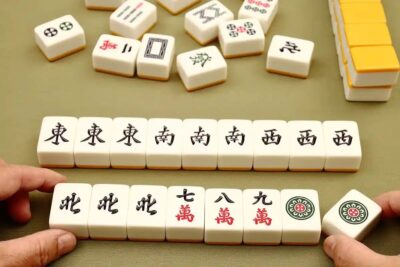
At the beginning of a round, the tiles are shuffled and arranged into walls in front of the players. Each player receives an initial hand of tiles.
Players then take turns drawing one tile and usually discarding one tile. The goal is to improve your hand with each turn while also watching what other players discard.
Depending on the rules being used, a player may claim another player’s discarded tile to complete a particular combination. This means players must constantly decide which tiles to keep, which ones to discard, and what their opponents may be trying to collect.
The round ends when a player completes a valid winning hand or, in some cases, when no more playable tiles remain.
Is Mahjong a Game of Luck or Skill?
Mahjong involves both luck and skill. Players cannot control which tiles they draw, so chance always plays a role. However, experienced players learn how to make better decisions based on their current hand, discarded tiles, possible combinations, and the behavior of other players.
Knowing when to change your strategy can be just as important as receiving a strong starting hand. Over time, players often become better at recognizing patterns and estimating which tiles may still be available.
Popular Types of Mahjong
Mahjong does not have one universal ruleset. Different regions have developed their own versions of the game.
- Chinese Mahjong: A broad term covering several traditional Chinese rule systems.
- Hong Kong Mahjong: Known for relatively straightforward rules compared with some other versions.
- American Mahjong: Often uses Jokers and an annually updated card showing official winning hands.
- Japanese Riichi Mahjong: Features its own scoring system, betting sticks, and the important concept of Riichi.
Beginners should choose one rule system and learn it first rather than trying to memorize every Mahjong variation at once.
Why Is Mahjong So Popular?
Part of Mahjong’s appeal comes from the balance between strategy and social interaction. A single round can involve careful planning, unexpected draws, defensive decisions, and dramatic last-minute wins.
The visual design of Mahjong tiles is another reason the game remains so recognizable. Dragons, Winds, Bamboo, Characters, Dots, and other traditional motifs have become cultural symbols that extend beyond the gaming table.
Today, Mahjong-inspired designs can be found on apparel, accessories, gifts, wall art, mugs, and other decorative items, allowing players to celebrate their interest in the game even when they are not playing.
Final Thoughts
Mahjong may look complicated when you first see a table filled with unfamiliar tiles, but the basic idea is surprisingly approachable. Players draw and discard tiles while building combinations and working toward a complete winning hand.
Start by learning the three numbered suits, the Wind and Dragon tiles, and the basic combinations of Chows, Pongs, Kongs, and pairs. Once those concepts become familiar, the rest of the game becomes much easier to understand.
Looking for a gift that feels a little more personal? Explore our collection of Mahjong merchandise featuring unique designs inspired by classic tiles, game-night culture, and Mahjong lovers everywhere. From apparel and accessories to home décor and gifts, there is something for every kind of player.
